IT KNOWLEDGE | Security Inspection Solutions
A secure entrance needs more than a quick visual check. Security personnel need clear information, consistent procedures, and equipment suited to the vehicles entering the facility. A suspicious object beneath a chassis, a cargo load requiring additional imaging, and a radiological alarm are different inspection challenges. Choosing Under Vehicle Inspection Systems starts with identifying those challenges and deciding what information operators need before a vehicle proceeds.
IT Knowledge, known in Arabic as Al Ilm Al Taqni, offers security solutions covering supply, installation, commissioning, training, maintenance, and selected rental arrangements. This guide explains how to evaluate Under Vehicle Inspection Systems and the related products listed on the company website. It also explains where Explosives Detection Equipment fits within a broader inspection process, while distinguishing visual imaging from material identification and radiation monitoring.
Plan Your Inspection Point With IT Knowledge
Discuss your facility, vehicle types, lane count, and project duration with IT Knowledge. Equipment availability, rental terms, prices, and delivery dates are confirmed in the offer.
In This Guide
- When to Upgrade Your Vehicle Inspection Point
- Imaging, Explosives Detection, and Radiation Monitoring
- Products Covered in This Guide
- VL108 Undercarriage Camera System
- AT2900 Vehicle Inspection System
- NUCTECH WETAN R100
- Radiation Monitoring Solutions
- Equipment Comparison Table
- Requesting a Technical and Commercial Offer
- Installation and Site Preparation
- Purchase and Rental Options
- Training, Maintenance, and Support
- Practical Project Examples
- Frequently Asked Questions
- Contact IT Knowledge
When Does Your Facility Need a Better Vehicle Inspection Point?
If inspection relies on a brief glance or a manual tool alone, reviewing previous checks can be difficult. Different shifts may also follow different routines. Under Vehicle Inspection Systems can help provide a more consistent visual record of the underside of vehicles, depending on the selected configuration. The objective is to support trained operators with useful information and an agreed process for reviewing it.
Ask whether your team can document inspections, examine the required underside areas, and retrieve a previous vehicle record. Consider whether incoming materials require radiation monitoring or whether your security policy specifies Explosives Detection Equipment. These questions establish the scope of the project. A general description of the entrance and permitted photographs can help IT Knowledge discuss suitable options before preparing a detailed proposal.
Which Customers Should Consider These Solutions?
Security managers, facility managers, procurement teams, and industrial operators may need Under Vehicle Inspection Systems where controlled vehicle access and inspection records are important. A factory receiving delivery trucks has different requirements from an office building handling employee cars and visitors. Logistics facilities may experience sharp changes in traffic throughout the day. Equipment selection should reflect those differences rather than assuming that one entrance layout suits every customer.
Some organizations may require Explosives Detection Equipment as an additional layer defined by their risk assessment. Metal processing and recycling operations may instead prioritize radiation monitoring for incoming loads. Needing one function does not automatically justify purchasing every device. A useful proposal explains why each component is included, who operates it, and how its results support the facility’s existing access procedures.
Imaging, Explosives Detection, and Radiation Monitoring: What Is the Difference?
Camera-based Under Vehicle Inspection Systems show visible components of the vehicle underside. X-ray imaging systems provide other kinds of information about objects or contents according to their design. Specialized Explosives Detection Equipment may use a different detection principle to assess materials. Seeing an unusual object in an image is not the same as establishing its chemical composition, and an image should not be described as a definitive material analysis.
Radiation portal monitors detect ionizing radiation or classify sources according to their configuration. They are not automatically substitutes for Explosives Detection Equipment or underside cameras. Procurement teams should therefore specify whether they need visual inspection, radiological monitoring, or a dedicated material assessment function. Several technologies can be combined within one security process, but the purpose and limitations of each device must remain clear.
| Technology | Main Purpose | What to Confirm |
|---|---|---|
| Optical underside imaging | View visible chassis components | Coverage, lighting, records, site demonstration |
| X-ray imaging | Produce images according to system design | Model, intended use, safety documentation |
| Specialist explosives detection | Assess materials according to device principle | Task, technology, limitations, training |
| Radiation monitoring | Detect ionizing radiation or classify sources | Detector type, configuration, application |
Which Products Are Covered in This Guide?
The linked website section currently includes NUCTECH RM Series, AT100L, Arktis P-RPM-IDn, Arktis FRPM-B, RC2PLUS, and RadComm RC4000 / RC4069. Its associated navigation also links to VL108, AT2900, and NUCTECH WETAN R100. This guide covers those products while explaining that some are supporting radiation solutions rather than optical Under Vehicle Inspection Systems in the narrow sense.
When requesting Explosives Detection Equipment or another security solution, ask for the precise model and proposed configuration. Accessories, software, and optional functions can differ between versions. The descriptions below provide a starting point for evaluation. Contractual specifications should come from the approved technical offer and current model documentation. Browse the vehicle inspection and supporting equipment section to access the relevant product pages.
VL108: A Camera-Based Approach to Undercarriage Inspection
VL108 is presented among Under Vehicle Inspection Systems intended for visual examination. Its website page lists four cameras, LED illumination, a 22-inch display, a stated load capacity of up to 30 tonnes, and a supported vehicle speed of up to 30 km/h. These are published introductory figures. They should be confirmed for the supplied version and its actual installation conditions before entering a purchase specification.
For buyers evaluating Under Vehicle Inspection Systems, the practical questions concern coverage, image clarity, review functions, and storage. Request a demonstration using representative vehicles and discuss installation position, cable routing, and drainage. Consult the VL108 camera system page for the published information. An optical camera should not be treated as Explosives Detection Equipment that independently identifies the chemical composition of an object.
AT2900: Define the Proposed Vehicle Inspection Configuration
IT Knowledge presents AT2900 as a vehicle inspection solution and mentions dual-energy imaging, number plate recognition, and an underside inspection function. When comparing it with standalone Under Vehicle Inspection Systems, request a breakdown of standard and optional components. Clarify how images are associated with vehicle records and which vehicle categories and site dimensions the offered configuration is intended to accommodate.
If the proposal includes X-ray technology, obtain model-specific safety documentation and operating instructions before approving arrangements for vehicles and occupants. Do not transfer operating assumptions from another product. Review the AT2900 vehicle inspection page and request written clarification of its scope, including whether separate Explosives Detection Equipment is needed for the facility’s specified material assessment task.
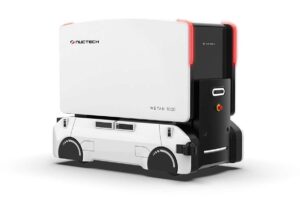
NUCTECH WETAN R100: Mobile Inspection Through Backscatter Imaging
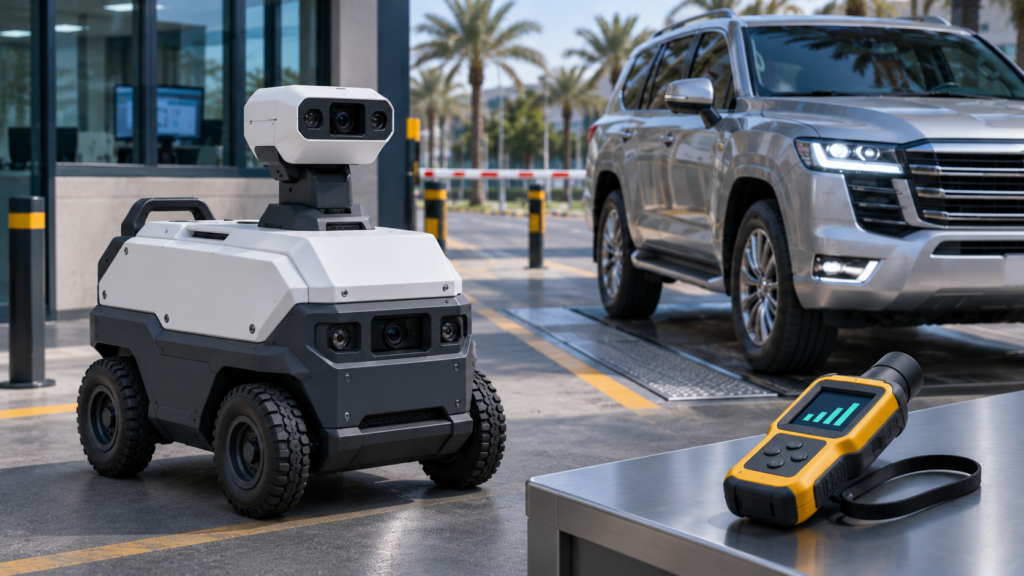
The WETAN R100 product page describes a mobile inspection robot using X-ray backscatter imaging. NUCTECH’s own published material also identifies this model among its robotic inspection solutions. Its role differs from fixed camera-based Under Vehicle Inspection Systems. Evaluation should therefore begin with the required imaging task, the available movement area, and the operating arrangement proposed for the inspection location.
Ask for a practical explanation of image presentation, preparation, training, and site requirements. Clarify whether the intended use is permanent or temporary. Do not equate imaging capability with the material identification function of analytical Explosives Detection Equipment. See the WETAN R100 product page and NUCTECH’s manufacturer information when discussing the offered system.
NUCTECH RM Series: Radiation Monitoring for Different Applications
The RM Series page describes a family of radiation monitoring solutions with configurations for different applications, including people, vehicles, and baggage. These products can provide a supporting layer where radioactive material monitoring is required. They are not optical Under Vehicle Inspection Systems or Explosives Detection Equipment simply because the website groups related security products together. The appropriate version depends on the inspection subject and required detection functions.
Before purchasing a solution alongside Under Vehicle Inspection Systems, ask for the exact model, detector types, alarm classification capabilities, and network connection options. If isotope identification is required, specify that function explicitly rather than assuming it follows from the family name. Review the NUCTECH RM Series page and ask IT Knowledge to explain how the proposed version addresses your organization’s particular operating requirement.
AT100L: Vehicle Radiation Monitoring at Access Points
AT100L is presented for monitoring vehicle radiation levels and generating an alert when a configured threshold is exceeded. Its page mentions audible and visual alarms, Ethernet communication, and IP65 protection for outdoor equipment. If it is used alongside Under Vehicle Inspection Systems, define how records are associated and who reviews each result. Do not assume that every software version provides the same integration functions.
The page includes additional operating figures, but current documentation should confirm the detection area, vehicle speed conditions, and optional components. Review the AT100L product page and request a distinction between standard and optional detection capabilities. The proposal should also separate radiation monitoring from Explosives Detection Equipment so that acceptance criteria are meaningful for each function.
Arktis FRPM-B: Radiation Monitoring for Trucks and Containers
FRPM-B belongs to the vehicle and cargo radiation portal category. Arktis describes its security portals as supporting alarm categorization and networked data transfer according to configuration. Its role can be discussed alongside Under Vehicle Inspection Systems where a facility needs both vehicle images and radiological monitoring of incoming loads. The operating procedure should keep the output of those functions distinct.
Request the correct lane dimensions, detector configuration, and model documentation in the technical offer. Pedestrian gate dimensions or metal detector features should not be used to establish specifications for a truck radiation portal. Consult the Arktis FRPM-B page together with Arktis’s official portal information, and evaluate any requirement for Explosives Detection Equipment separately.
Arktis P-RPM-IDn: Pedestrian Radiation Screening
P-RPM-IDn is a radiation portal for pedestrians and their belongings, rather than a vehicle imaging lane. Its official datasheet mentions spectroscopic isotope identification, a browser-based interface, and a gamma energy range of 30 to 3000 keV. It may be relevant when assessing pedestrian entrances that operate alongside vehicle lanes, but it does not replace Under Vehicle Inspection Systems at a vehicle checkpoint.
For a facility with several access routes, request a concept that distinguishes pedestrian and vehicle screening while organizing alarm review appropriately. See the IT Knowledge product page and the official Arktis datasheet. A radiation portal should not be described as Explosives Detection Equipment unless a separate, verified function supports that purpose.
RC2PLUS: Portable Radiation Monitoring
IT Knowledge describes RC2PLUS as a handheld gamma radiation detector with a display and audible and visual alarms. Its field role differs from fixed Under Vehicle Inspection Systems and truck passage portals. It may be discussed where trained personnel need portable radiation monitoring, but the proposed version, documentation, and training requirements should be established before assigning it a role in the inspection procedure.
Ask about battery operation, accessories, recording capabilities, and maintenance if those features matter to your project. Missing figures should not be filled with assumptions. The RC2PLUS page provides the published introduction. This product is discussed here as radiation monitoring equipment; Explosives Detection Equipment remains a separate category with a different purpose and operating principle.
RadComm RC4000 / RC4069: Monitoring Dense Materials and Loads
RadComm positions the RC4000 family for detecting low gamma emissions in high-density materials, including metal and scrap applications. The family uses PVT detectors and is available in different sizes and configurations. When considering it alongside Under Vehicle Inspection Systems, identify the truck types, load characteristics, and precise model being offered rather than treating the family name as a single fixed specification.
Read the IT Knowledge RC4000 / RC4069 page and RadComm’s official RC4000 information. Request a compliance schedule for the proposed configuration and associated services. Explosives Detection Equipment should be evaluated separately when the task involves assessing explosive materials rather than monitoring radiation from incoming shipments.

Equipment Comparison: Functions and Published Specifications
| Product | Category | Selected Published Information | Confirm in the Offer |
|---|---|---|---|
| VL108 | Underside camera imaging | Four cameras; 22-inch display; stated load up to 30 tonnes | Configuration and installation conditions |
| AT2900 | Vehicle inspection | Page mentions dual-energy imaging and plate recognition | Standard and optional components |
| WETAN R100 | Mobile backscatter imaging | X-ray imaging robot | Application, preparation, safety |
| NUCTECH RM Series | Radiation monitoring family | Different application configurations | Exact version and detectors |
| AT100L | Vehicle radiation monitoring | Audible/visual alerts; Ethernet; outdoor IP65 | Dimensions, options, speed conditions |
| Arktis FRPM-B | Truck and cargo radiation portal | Radiological screening at vehicle lanes | Lane design and detector configuration |
| Arktis P-RPM-IDn | Pedestrian radiation portal | Gamma range 30–3000 keV; spectroscopy | Entrance configuration and connections |
| RC2PLUS | Handheld radiation detection | Gamma monitoring; display and alerts | Version, accessories, battery operation |
| RC4000 / RC4069 | Load radiation monitoring | PVT detectors; different family configurations | Exact model and panel arrangement |
Start With the Required Outcome, Not Just a Product Name
Describe the problem in one clear sentence. For example, the facility may need a retrievable underside image for each visiting vehicle, or radiation monitoring for incoming scrap trucks. This makes it easier to evaluate Under Vehicle Inspection Systems against a useful outcome. A request for the latest security device alone leaves too much room for different interpretations of what the project must deliver.
Identify who reviews the result, how it is stored, and how vehicles move through the agreed procedure. If Explosives Detection Equipment is required, specify its intended task and the approved operating context. Clear requirements help IT Knowledge prepare a more relevant offer and help procurement teams compare alternatives without confusing products that perform fundamentally different inspection functions.
What Information Is Needed for an Accurate Quotation?
Provide the city, facility type, number and width of lanes, vehicle categories, and approximate daily and peak-hour traffic. Explain whether the project is a new installation or an upgrade, and whether records or plate recognition are required. These details help IT Knowledge discuss suitable Under Vehicle Inspection Systems and identify what needs a survey or further documentation before pricing.
For Explosives Detection Equipment, explain whether the requirement is permanent or event-based and whether the customer has an internal operating team. Include permitted general site photographs and known constraints affecting construction, electricity, or networking. You do not need a completed engineering specification to begin. An organized description is enough to support useful questions and avoid proposals with substantially different scopes.
Why Does Peak Traffic Matter?
Daily vehicle totals do not show how busy a checkpoint becomes at shift changes or during delivery periods. Selecting Under Vehicle Inspection Systems should include an estimate of peak arrivals, review time, and available queue space. Sometimes an improved lane arrangement contributes more to practical throughput than a higher published vehicle speed that does not reflect the complete inspection process.
Where Explosives Detection Equipment or another additional check forms part of the process, its location and relationship to the main lane should be defined. Request an operating concept that explains vehicle movement in practical terms and accommodates approved service and emergency access arrangements. The relevant outcome is a procedure that the team can apply during busy periods, rather than an isolated speed figure.
What Does Useful Image Quality Look Like?
When comparing Under Vehicle Inspection Systems, focus on what the operator actually sees. Are the required areas visible? Can relevant details be enlarged usefully? Is the display organized clearly? Two brochure images may look similar even though day-to-day review differs when inspecting a low passenger car, a van, or a truck with a different underside layout.
Request demonstrations using a representative vehicle sample and record observations consistently. Discuss lighting, dirt, moisture, and approved cleaning procedures. Explosives Detection Equipment should be assessed using criteria appropriate to its technology and intended task. Camera image quality alone cannot establish whether all the other inspection functions in a proposed security solution meet the facility’s needs.
Archiving and Plate Recognition: Define the Required Record
If Under Vehicle Inspection Systems must support historical review, clarify how each image is associated with a timestamp, plate, or visit record. Specify retention requirements and who can search or export information. Capturing an image is not the same as providing an organized archive that staff can use effectively during an internal review or a later investigation.
If events from Explosives Detection Equipment or radiation portals are associated with vehicle records, confirm time synchronization and event identification. Ask about backups, storage limits, and network interruptions. These are practical procurement questions because they affect everyday access to information and may influence computer, storage, and integration requirements. The proposed configuration of Under Vehicle Inspection Systems should state how the agreed recording functions will be delivered.
Integration With Gates and the Control Room
A facility may want an inspection image displayed beside an entrance camera or plate record, or an event sent to its control room. The Under Vehicle Inspection Systems offer should name the required integrations and identify existing system versions. A general statement that equipment is integrable does not establish that every requested function is included without development work, additional hardware, or software licensing.
Apply the same approach to Explosives Detection Equipment. What information can be transferred, who reviews it, and does the connection provide only an alert or a fuller inspection record? Define tests for agreed functions and clarify responsibilities where several suppliers are involved. The IT Knowledge services page provides a starting point for discussing the wider project scope.
Need Help Choosing the Right Configuration?
Discuss your facility, vehicle types, lane count, and project duration with IT Knowledge. Equipment availability, rental terms, prices, and delivery dates are confirmed in the offer.
Preparing the Lane Before Installation
Site preparation includes the road surface, traffic path, drainage, electrical supply, and data connections. Installing Under Vehicle Inspection Systems requires a clear statement of civil works, cable protection, and workstation placement based on the project design. Responsibilities should be divided explicitly between the equipment supplier, customer, and construction contractor so that essential preparation does not fall outside everyone’s agreed scope.
If the project includes Explosives Detection Equipment or X-ray equipment, review the specific requirements of each technology. Request a readiness checklist before scheduling installation, identifying what the facility must provide and what the supplier will deliver. This helps the facilities team organize the entrance correctly and avoids relying on general estimates that do not reflect the actual condition of the proposed inspection lane.
Heat, Dust, Rain, and Outdoor Operation
Outdoor Under Vehicle Inspection Systems must suit the site’s environmental conditions, but a temperature figure is not a complete assessment. Discuss direct sunlight, dust, water exposure, vibration, and expected loading. Identify which components are installed outside and which need a suitable room or enclosure. A computer or monitor may have different environmental requirements from the inspection unit positioned in the road.
Review connector protection, approved lens cleaning, and drainage arrangements. Environmental limits for Explosives Detection Equipment and other specialist devices should come from the relevant model documentation. Replace broad descriptions such as rugged or weatherproof with verifiable requirements, and retain the applicable operating and maintenance instructions in the handover file. This makes environmental suitability easier to assess before commissioning.
Should You Buy or Rent?
Purchasing Under Vehicle Inspection Systems may suit permanent entrances with ongoing use, while rental may be worth discussing for a temporary project, event, or defined operating period. A fair comparison includes duration, transport, installation, removal, training, and technical support. The initial payment alone does not show the full cost or establish whether the scope of two offers is comparable.
When renting Explosives Detection Equipment, request written confirmation of the model, accessories, availability, and operating responsibilities. Some IT Knowledge product pages describe sales, rental, and maintenance options, but availability and terms must be confirmed for the specific device. Ask for an offer stating the equipment, expected readiness date, included services, and conditions affecting delivery, use, collection, or return.
| Consideration | Purchase | Rental |
|---|---|---|
| Use period | Discuss for ongoing facilities | Discuss for defined project periods |
| Scope | Equipment, preparation, and agreed services | Duration, logistics, installation, removal, services |
| Maintenance | Warranty or separate service terms | Confirm coverage during the rental period |
| Readiness | Supply schedule and prepared site | Availability and prepared site |
| Comparison | Overall cost over intended use | Total agreed scope for the required period |
Why Do Quoted Prices Differ?
The price of Under Vehicle Inspection Systems can vary with the number of units, imaging technology, computer configuration, storage, software, plate recognition, and civil works. One quotation may include training and maintenance while another covers hardware only. Compare the actual scope and exclusions before comparing totals. Wherever possible, ask suppliers to price against the same list of requirements.
The same applies to Explosives Detection Equipment and radiation portals: technology, purpose, and detector configuration are material differences. Separate essential items from options and identify recurring charges where applicable. A universal price would be misleading without understanding the project. A defined requirement followed by a written technical and commercial offer provides a stronger basis for budgeting and procurement approval.
What Should the Technical Offer Include?
A Under Vehicle Inspection Systems offer should identify the manufacturer, model, version, quantity, core specifications, accessories, and required software. It should explain installation, lane arrangements, work boundaries, training, and acceptance testing. Warranty terms, exclusions, technical support, and handover documents should also be clear. Leaving those points undefined can produce different expectations when equipment arrives or the project moves into operation.
For Explosives Detection Equipment, describe the device’s function, operating principle, and requirements separately from the other components. A compliance schedule can connect each customer requirement with an offered item and an appropriate evidence source or test. This helps procurement reviewers identify omissions before contracting, rather than discovering that an essential feature or service was not included after delivery.
How Can You Compare Suppliers Fairly?
Begin with mandatory requirements and optional preferences. Mark each response as compliant, requiring clarification, or excluded. When reviewing Under Vehicle Inspection Systems, assess image usability, records, site preparation, and after-sales services separately. A proposal may perform well in one area but omit a component needed for daily operation, or depend on an additional cost that is not obvious from the headline price.
For Explosives Detection Equipment, establish whether suppliers are proposing the same technology or explain the differences clearly. Do not equate imaging an object with identifying its material, or pedestrian screening with vehicle monitoring. Weight requirements according to their impact on your facility and record the reasons for selection. A useful comparison evaluates suitability rather than the number of features in a brochure.
Training: Turning Equipment Into a Working Process
Under Vehicle Inspection Systems needs an operating team that understands image review, records, and the limits of its responsibilities. Request a training plan covering everyday users and technical administrators, with reference materials suited to each group. Discuss practical sessions using representative vehicles and a way to confirm that trainees understand the essential tasks before the facility accepts the system for routine operation.
Explosives Detection Equipment requires training appropriate to its technology, manufacturer instructions, and the operating organization’s procedures. Include training within the written project scope, defining sessions, language, documentation, and arrangements for staff changes. Facilities with rotating shifts benefit from a short daily checklist and a clear support route. The knowledge needed to operate the system should not depend on one employee alone.
Preventive Maintenance and Technical Support
A maintenance plan helps keep Under Vehicle Inspection Systems ready for use. Tasks should follow the equipment instructions and contract, including permitted cleaning, inspections, connection checks, and applicable software work. Distinguish routine tasks that users may perform from maintenance requiring qualified technicians. Recording symptoms and service history also helps the support team diagnose problems without losing information between operating shifts.
For Explosives Detection Equipment or radiation monitoring systems, ask what visits, parts, and verification tasks are included. Define support hours and escalation arrangements according to the written offer rather than assuming immediate or round-the-clock attendance. Conditions may vary by model and location. Specific contractual terms are more useful than an undefined promise of fast support when planning operational continuity.
Acceptance Testing: What Demonstrates Readiness?
Acceptance of Under Vehicle Inspection Systems should involve more than powering on a monitor and displaying the first image. For Under Vehicle Inspection Systems, prepare a checklist covering agreed components, useful image presentation, record storage and retrieval, permissions, required connections, and documentation. Establish the tests before contracting so that both customer and supplier understand what demonstrates successful delivery of each agreed function.
For Explosives Detection Equipment and radiation systems, use the approved model-specific acceptance method with competent personnel and documented conditions. An improvised demonstration is not a substitute for an agreed acceptance process. Record outstanding items, responsible parties, and completion dates. If the project procedure distinguishes provisional handover from final acceptance, make that distinction clear in the implementation schedule and related documents.
Records, Permissions, and Information Management
Some Under Vehicle Inspection Systems records may include images, timestamps, and plate information. Define who can view, search, export, or modify those records and establish retention arrangements appropriate to the organization. Separate everyday user access from administrative functions where the system supports it. These decisions should be agreed with the responsible facility and information technology teams before the system enters routine use.
If Explosives Detection Equipment or portal events are transferred to a control room, review connectivity, account management, and backup arrangements. They are design requirements to discuss, not features to assume for every model. Ask what the offered version supports and identify who manages the server, network, and updates. Clear ownership reduces gaps between the equipment supplier and the customer’s internal teams.
How IT Knowledge Supports the Project
IT Knowledge product pages describe supply, installation, commissioning, training, and maintenance for several listed devices, with rental options for selected solutions. A Under Vehicle Inspection Systems discussion can begin with the facility description and develop into a proposal that connects actual requirements with an appropriate configuration. Clear scope and handover documents help the customer transfer the completed installation to its operating team.
Where Explosives Detection Equipment or radiological monitoring is required, ask the team to distinguish those functions and explain how they fit the entrance process. More equipment does not automatically make a proposal more appropriate. The goal is to meet defined requirements within a testable scope. Review the IT Knowledge website and company services before discussing product availability and project terms.
Example: A Factory Receiving Delivery Trucks
Consider a factory receiving employee cars in the morning and material deliveries throughout the day. Separate requirements for regular access records from requirements related to the incoming loads. A single representative vehicle is not enough for design decisions: trucks may differ from passenger cars in dimensions, stopping position, turning space, and the area required for waiting before inspection.
When specifying Under Vehicle Inspection Systems for this scenario, identify which lanes serve cars and which serve trucks, and whether records need central management. Assess radiation monitoring separately according to the materials handled. If Explosives Detection Equipment forms part of the site’s approved policy, define its operating responsibility and place in the procedure rather than assuming that the imaging system already performs that task.
Example: An Office Facility With Frequent Visitors
An office facility may need consistency between staff arrivals and external visitor checks. Document the process from vehicle arrival to the authorized access decision, including the information shown to the operator and situations requiring supervisory review. Agreeing permissions and responsibilities early helps reduce differences between shifts and makes the project’s expected operating behavior easier to demonstrate.
During a Under Vehicle Inspection Systems demonstration, prioritize everyday usability and access to previous visit records. Do not add Explosives Detection Equipment solely to expand the equipment list; connect them to an approved need. IT Knowledge can discuss the entrance count, visitor profile, and site environment, then define supply, training, installation, and support within a proposal that the customer’s decision-makers can review.
Example: A Temporary Project or Event
Temporary projects require careful coordination of readiness, transport, installation, and removal. Establish the start of actual use, delivery and trial dates, and responsibility for power, communications, and environmental protection. Overlooking these arrangements can delay operation even if the equipment itself is available at the expected time. The event schedule should allow for agreed preparation and verification activities.
If Under Vehicle Inspection Systems is rented, clarify whether transport, training, an operator, installation, and removal are included. Confirm the specific model and its operating requirements before approving the plan. Assign a customer contact for site coordination and maintain a checklist of tasks that must be completed before vehicles are admitted under the new inspection arrangement. This creates a more practical basis for deployment.
Align Security, Procurement, and Facilities Teams
Security may prioritize image coverage, procurement may focus on warranty conditions, and facilities staff may concentrate on construction work. A strong purchasing brief brings those concerns together and distinguishes essential requirements from later options. An internal review before requesting offers helps prevent different suppliers receiving different instructions, which would make their commercial responses difficult to compare fairly.
Give Under Vehicle Inspection Systems its own functional requirement, then separately describe any Explosives Detection Equipment or radiation monitoring requirement. Add installation, training, testing, and maintenance services, and ask suppliers to state exclusions explicitly. This approach helps decision-makers understand how each cost supports actual use. It also makes the comparison more meaningful than simply arranging quotations from the lowest total to the highest.
Keep a Complete Handover File
After commissioning, retain equipment identities and serial numbers, model datasheets, approved connection drawings, and acceptance results. Add support contacts, training records, the maintenance plan, and warranty conditions. An organized handover file for Under Vehicle Inspection Systems helps new staff understand the installation and avoids relying on the memory of one person who may later change roles or move to another shift.
For Under Vehicle Inspection Systems, record who manages accounts, approves configuration changes, and logs service work. Keep specialist equipment documentation identifiable within the same project record. This does not need to become a complex administrative exercise. The practical objective is to make accurate information easy to find and to support follow-up against the services, responsibilities, and commitments included in the contract.
Frequently Asked Questions
Can One Device Cover Every Inspection Requirement?
There is no universal answer for every facility. Under Vehicle Inspection Systems may meet an underside imaging requirement while other tasks require different technologies. Define the required functions and compare the proposed components against them. A camera or radiation monitor should not be presented as covering every material or threat category. Its role depends on the actual technology, configuration, and operating instructions.
Can a Camera Identify the Material of a Hidden Object?
A camera displays what falls within its view and helps operators notice visible objects or differences. It does not independently establish chemical composition. A requirement for Explosives Detection Equipment should therefore be evaluated separately according to the approved task. Accurate terminology in the technical offer helps prevent the customer from expecting a function that the proposed imaging device does not provide.
Can the Same System Handle Passenger Cars and Trucks?
That depends on the model, load limits, coverage, and installation design. When specifying Under Vehicle Inspection Systems, provide representative vehicle categories, approximate dimensions, and weights, then request written confirmation of suitability. Include occasional service vehicles as well as regular traffic. A rarely used heavy vehicle can still be important to the specification if the facility expects it to pass through the same inspection location.
Can Images Be Saved and Retrieved Later?
Archiving may be included in the proposed configuration or may require specific software and storage. For Under Vehicle Inspection Systems, request a demonstration of saving, searching, retrieving, and exporting records. Define retention needs. Disk capacity alone does not establish the number of days available because image size, traffic volume, compression, and recording settings all affect actual storage requirements and the design of backup arrangements.
Is a Radiation Portal a Substitute for Explosives Detection?
No. Radiation monitoring and Explosives Detection Equipment address different functions. They may complement each other if the facility’s assessment requires both, but one does not establish that the other task has been completed. The technical offer should identify each function separately, and the acceptance process should verify the agreed performance of the relevant equipment within its documented operating conditions.
Is a Fixed System Always Better Than a Mobile One?
The choice depends on duration, lane design, preparation constraints, and whether equipment must move between locations. A permanent entrance may favor a fixed arrangement, while another project needs flexibility. Explain the practical constraints before choosing. Mobility alone does not establish lower cost or easier operation; the comparison should include preparation, staffing, training, transport, and support requirements.
Can Equipment Be Used at Night?
The answer depends on the device, illumination, and operating environment. For Under Vehicle Inspection Systems, request an image demonstration under conditions representative of night operation at the site. Consider the operator’s workstation as well as the scanning area. A claim of bright lighting is less useful than a practical demonstration showing whether the required details remain visible without distracting reflections.
Will Installation Interrupt Access?
Temporary traffic arrangements may be necessary depending on civil works, connections, and mounting requirements. Request an implementation plan with stages, expected durations, and any alternative access route the facility requires. Coordinate with security and facilities staff, and confirm power and network readiness before the installation date. Advance preparation can prevent avoidable delays during the agreed work period.
Can Rental Include Installation and Support?
Some IT Knowledge pages describe rental arrangements with installation and technical support. Confirm the terms for the exact product, location, and operating period requested. Do not transfer the conditions of one device to another without written agreement. The offer should identify responsibilities for transport, operation, commissioning, support, removal, and return, together with any relevant commercial conditions.
Does the Team Need Specialist Training?
Training requirements depend on the equipment and task. Request instruction suited to the site’s users, including routine operation and fault reporting. For Explosives Detection Equipment, X-ray equipment, and radiation systems, model instructions and organizational requirements establish the necessary competence. A simple interface does not remove the need for suitable training, defined responsibilities, and reference material for everyday use.
How Do I Know Whether Maintenance Is Included?
Read the service clause rather than relying on a general heading. Ask which tasks, visits, parts, travel, and support periods are covered. An equipment warranty is not necessarily a preventive maintenance contract. Obtain a clear statement of coverage and exclusions, and retain it in the project file so that the operating team understands how to request and manage service.
Can Several Entrances Be Managed Together?
The offered configuration may support central management or may require additional servers, software, licenses, and networking. For Under Vehicle Inspection Systems, specify entrance and user counts, data locations, and required connections. Request a demonstration of the agreed workflow, including what remains available locally during an interruption. The proposal should explain how records and events are handled when normal connectivity is restored.
Are Website Specifications Final Contract Specifications?
Product pages provide useful introductions, but the approved offer and current model datasheet should establish what will actually be delivered. Options and versions can differ, and published information may need clarification. Request a model-specific schedule rather than importing uncertain figures into a purchase order. This supports clearer expectations and a more straightforward technical acceptance process when installation is complete.
What If I Do Not Know Which Model to Request?
When enquiring about Under Vehicle Inspection Systems, describe the problem, vehicles, traffic, lane count, and intended operating period. You do not need to select a model before making an enquiry. Ask IT Knowledge to explain suitable alternatives and their scope, then review the proposal with security, facilities, and procurement personnel. A coordinated decision can account for operational use, project preparation, budget, and ongoing maintenance needs.
Can the Project Be Delivered in Phases?
Phased implementation may be possible if the design and integration requirements support it. Identify the priority function and ask which preparations should be included now to support later expansion. Storage capacity and network provision may be early considerations. However, do not assume that every future addition will work without new licensing, hardware, configuration, or technical changes.
Request a Technical Offer From IT Knowledge
Selecting Under Vehicle Inspection Systems affects the quality of information available to the security team and the practicality of daily entrance operations. Begin by defining what must be viewed and recorded, then assess any supporting technologies justified by the facility’s requirements. Useful testing, suitable site preparation, training, and a clear service scope matter alongside the published equipment specifications.
Contact IT Knowledge on 0541882204 and provide the city, facility type, vehicle categories, lane count, and intended operating period. Mention any requirement for Explosives Detection Equipment or radiation monitoring so that each function can be addressed clearly. Start with a practical discussion, followed by a written offer identifying the equipment, included services, availability, and agreed project terms.
Request Your Technical and Commercial Offer
Discuss your facility, vehicle types, lane count, and project duration with IT Knowledge. Equipment availability, rental terms, prices, and delivery dates are confirmed in the offer.
Manufacturer References
Related Topics
Underside Imaging
Vehicle Screening
Security Equipment
Radiation Monitoring
Truck Inspection
Equipment Rental
Installation
Maintenance
VL108
AT2900
WETAN R100
NUCTECH RM Series
AT100L
Arktis FRPM-B
Arktis P-RPM-IDn
RC2PLUS
RadComm RC4000
IT Knowledge
IT Knowledge