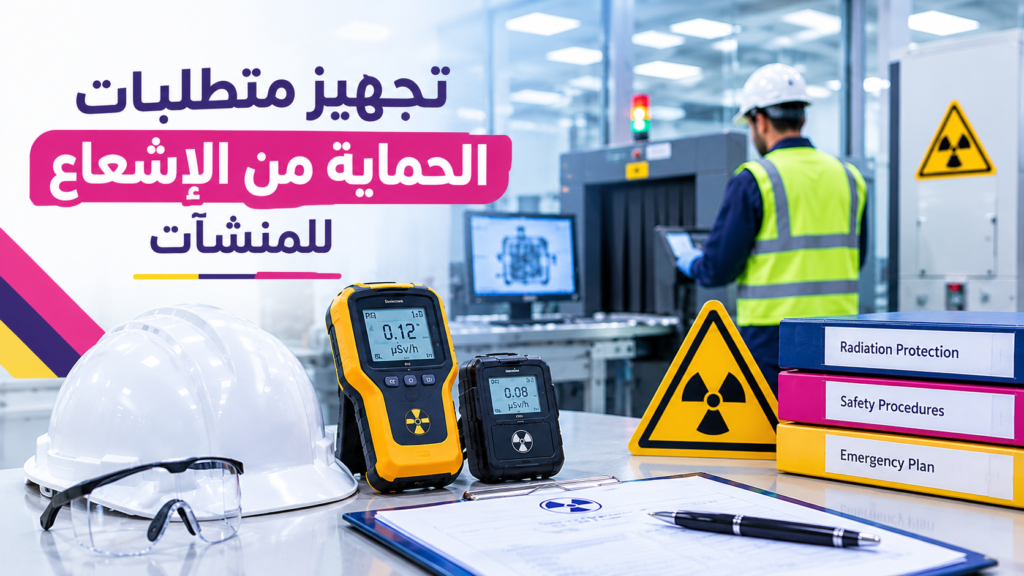
Preparing radiation protection requirements is an essential step for facilities using X-ray equipment, radiation screening systems, or other applications requiring specific radiation safety procedures. Preparation involves more than supplying equipment: it also includes technical documentation, assigning staff responsibilities, preparing warning signs, and reviewing measurement and monitoring requirements according to the activity.
IT Knowledge Establishment helps facilities organize radiation protection and safety requirements, prepare the necessary technical and regulatory files, and identify appropriate needs based on the equipment used, working conditions, and relevant licensing requirements.
If you are looking for a clear starting point for preparing your facility, this guide explains the main elements of a Radiation Protection File, the role of the Radiation Safety Officer (RSO), types of measurement and monitoring equipment, warning signs, and documents you may need before applying to the competent regulatory authority.
What Will You Learn in This Guide?
- What preparing radiation protection requirements means and why it matters for facilities.
- Facilities that may need radiation protection procedures.
- The role of the radiation safety/protection officer (RSO/RPO).
- Radiation measurement and monitoring equipment.
- Radiation warning signs and labels.
- Technical documents and radiation safety plans required for the activity.
- Steps for organizing facility requirements and preparing a license application.
Table of Contents
- What Does Preparing Radiation Protection Requirements Mean?
- Which Facilities Need Radiation Protection?
- Radiation Safety Officer (RSO)
- Radiation Monitoring Equipment
- Radiation Warning Signs
- Radiation Protection Files and Documentation
- Facility Preparation Steps
- IT Knowledge Establishment Services
- Frequently Asked Questions
What Does Preparing Radiation Protection Requirements Mean?
Preparing radiation protection requirements means organizing the technical and administrative elements needed to support the safe use of equipment and sources that emit ionizing radiation, according to the activity and applicable regulatory requirements.
These elements may include appointing a radiation safety officer, selecting appropriate measuring instruments, providing personal monitoring where needed, displaying warning signs, preparing a Radiation Protection Program (RPP), and compiling relevant records, reports, and technical certificates.
Important Information: There is no single checklist that applies to every facility. Radiation protection requirements vary according to equipment type, intended use, risk assessment, and the competent regulatory authority. Each facility’s actual needs should therefore be established before finalizing its equipment and documentation list.
This preparation aims to help facilities organize safety procedures, clarify responsibilities, document measurement, monitoring, and training activities, and prepare applications for relevant licenses or permits where required. Final approval remains subject to meeting the competent authority’s applicable requirements.
Which Facilities Need Radiation Protection?
The need to prepare radiation protection requirements varies according to the activity and equipment used within a facility. Some activities require documented safety, measurement, and monitoring procedures, while requirements for others vary according to risk assessment and relevant regulatory provisions.
Examples of facilities and activities that may need organized radiation protection arrangements include:
1. Medical Facilities
Medical facilities using X-ray equipment or radiographic imaging systems may need appropriate technical documentation and safety procedures according to equipment type, intended use, and applicable regulatory requirements.
2. Security Screening Facilities
Airports, security facilities, and inspection centers may use X-ray screening systems to inspect baggage, parcels, or materials. Working with these systems requires attention to safe operating procedures, warning signs, and measurement and documentation requirements applicable to the activity.
3. Industrial Facilities
Some industrial activities use radiation equipment or applications for inspection, testing, and measurement. Protection requirements depend on the technology used, the level of risk, and the operating site’s characteristics.
4. Facilities Using Specialized Radiation Applications
Facilities using radiation sources or equipment in specialized applications may need additional monitoring, training, or emergency response arrangements according to the activity and relevant requirements.
Radiation Safety Officer (RSO)
The Radiation Safety Officer (RSO) is an important part of radiation safety management in facilities where this role is required. The officer monitors implementation of approved procedures, helps organize records and documentation, and coordinates protection, measurement, and training requirements according to the activity.
When preparing radiation protection requirements, radiation safety responsibilities should be clearly defined, and applicable qualification and appointment requirements established by the competent authority should be met whenever this appointment is required.
What Are the Responsibilities of a Radiation Safety Officer?
- Monitoring approved radiation protection and safety procedures within the facility.
- Contributing to the preparation and review of the Radiation Protection Program (RPP).
- Organizing measurement, monitoring, and personal dose records where applicable.
- Following up radiation safety training and awareness records.
- Helping review warning signs and restricted-area entry instructions.
- Participating in emergency preparedness and radiation emergency response arrangements according to the activity’s requirements.
- Coordinating the technical documentation and records required for the facility file.
Some authorities use the term Radiation Protection Officer (RPO) instead of RSO, or apply specific definitions to these roles. The title approved for the activity and regulatory authority should therefore be used, without assuming that job titles or qualification requirements are identical in all cases.
Visit our website to explore the services of IT Knowledge Establishment
IT Knowledge Establishment helps facilities organize radiation protection requirements, including supporting arrangements for a radiation safety officer where needed and reviewing relevant preparation elements and technical documentation according to the service scope and activity.
Radiation Measurement and Monitoring Equipment
Measurement and monitoring equipment may form part of preparing radiation protection requirements, but the equipment type, quantity, and specifications should be determined by intended use, risk assessment, and applicable regulatory requirements. Equipment used in one facility is not necessarily required in every other facility.
The following table presents examples of equipment that may form part of radiation protection and measurement arrangements:
| Equipment and Application | Purpose |
|---|---|
| Portable Radiation Survey Meter | Measuring radiation or dose rates at designated locations according to the instrument type and specifications. |
| Personal Dosimeters (TLD/OSL) | Recording and monitoring workers’ personal doses when required by the activity. |
| Electronic / Direct-Reading Dosimeter | Providing direct radiation dose readings and monitoring according to the instrument’s features. |
| Alarm Dosimeter | Issuing an alert when preset limits or alarm levels are reached, according to device settings and facility procedures. |
| Area Radiation Monitor | Monitoring radiation levels in a designated area when required by the system design or activity. |
| Radiation Emergency Response Equipment | Supporting emergency response procedures according to the facility’s characteristics and approved emergency plan. |
How Do You Select Radiation Protection and Measurement Equipment?
Before selecting suitable equipment, it is helpful to review the following key points:
- The type of equipment or radiation source used in the facility.
- The purpose of measurement and monitoring and the operating conditions.
- Whether the instrument’s specifications suit the required measurement range.
- Calibration requirements and calibration certificates where applicable.
- Personal monitoring requirements for workers, if required.
- Technical and regulatory requirements specific to the activity.
Selecting suitable equipment is part of preparing radiation protection requirements, but it does not replace the documentation, procedures, training, and signs required for the facility. Reviewing these elements together provides a clearer picture of needs before completing the preparation file.
Radiation Warning Signs and Labels
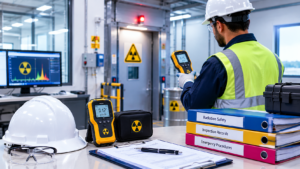
Warning signs and labels are important when preparing radiation protection requirements, as they alert workers and visitors to sources or areas requiring special precautions. Their types, locations, and content should be determined according to the activity, facility design, and applicable safety requirements.
Signage preparation involves more than displaying the radiation hazard symbol. It may also include restricted-area access instructions, X-ray operating warnings, safety guidance, and emergency information according to the facility’s requirements.
| Sign or Label | Purpose |
|---|---|
| Ionizing Radiation Warning Sign | Indicating a radiation hazard or ionizing radiation source at the designated location. |
| Controlled Area Sign | Defining the boundaries of an area subject to special access or work controls under facility procedures. |
| Radiation Warning Sign | Providing a clear warning to people near the relevant area. |
| X-Ray Warning Sign | Indicating equipment or an area associated with X-ray use. |
| X-Ray ON / Beam ON Sign | Indicating when radiation is being generated, where required by system design and procedures. |
| Access and Entry Instructions | Explaining entry conditions and precautions to follow in restricted areas. |
| Radiation Safety Instruction Signs | Providing basic instructions for workers and visitors according to the site. |
| Emergency Procedure Signs | Displaying guidance or contact information where relevant to the emergency plan. |
How Do You Select Suitable Signs for Your Facility?
The required signs depend on several considerations, including:
- The type of equipment or radiation source used.
- The nature of the area and its access restrictions.
- How the equipment operates and whether operating-status indicators are required.
- Entrances, exits, and movement routes within the facility.
- Regulatory requirements and approved safety procedures.
Sign locations and content are best reviewed as part of the facility preparation plan, rather than added at the end of the project without a clear connection to the layout of areas and equipment. This approach helps make radiation protection requirements clearer to workers and visitors.
Radiation Protection Files and Documentation
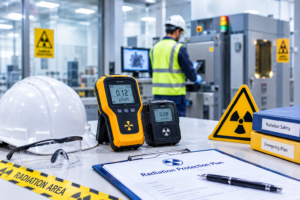
The Radiation Protection File is an important part of preparing radiation protection requirements. It brings together technical and regulatory information describing the activity, equipment, safety procedures, responsibilities, and measurement and training records, as required for the specific case.
Required documents vary between facilities. The following list should therefore be treated as examples of potentially relevant documents, rather than a universal mandatory checklist.
| Document or Record | Content or Purpose |
|---|---|
| Radiation Protection Program (RPP) | Defining the radiation protection framework, procedures, and responsibilities associated with the activity. |
| Radiation Safety / Radiation Protection Manual | Presenting instructions and procedures governing safe work within the facility. |
| Radiation Safety Assessment | Documenting the assessment of risks and considerations associated with radiation equipment or sources. |
| Dose Assessment Report | Presenting a dose assessment where this type of report is required for the activity. |
| Radiation Survey Report | Documenting survey and measurement results according to the inspection scope and approved procedures. |
| Emergency Preparedness and Response Plan | Explaining response procedures, responsibilities, and communications in an emergency. |
| Facility Layout | Showing the arrangement and locations of areas and equipment relevant to radiation protection requirements. |
| Radiation Source / X-Ray Equipment Inventory | Listing relevant equipment or sources and documenting the required information. |
| Radiation Monitoring Equipment Inventory | Recording measurement and monitoring equipment used within the facility according to the work scope. |
| Calibration Certificates | Documenting equipment calibration where required or applicable to the instrument used. |
| Personal Dosimetry Records | Documenting personal monitoring arrangements and results where required by the activity. |
| RSO/RPO Appointment Documentation | Documenting the appointment, responsibilities, and required qualifications where applicable. |
| Training and Awareness Records | Documenting relevant staff training and awareness activities. |
| Emergency Contact List | Identifying contact organizations and individuals involved in emergency procedures. |
| Equipment Technical Specifications | Describing the specifications and relevant technical data of the equipment used. |
| Manufacturer Certificates / Compliance Documents | Supporting documentation of equipment data and conformity with required specifications, as applicable. |
| Radiation Leakage Documentation | Documenting leakage inspection results or procedures where applicable to the equipment and activity. |
| Quality Assurance / Inspection Records | Documenting relevant inspection, quality assurance, and maintenance activities according to facility requirements. |
How Do You Organize Radiation Protection Documents?
To make the facility file easier to review, documents can be organized into clear groups, while ensuring each document is relevant to the actual activity:
- Facility and equipment information: Activity details, equipment information, and relevant layouts.
- Governance and responsibilities: The radiation protection program and responsibility and appointment documentation where needed.
- Measurement and monitoring: Relevant reports, records, and calibration certificates.
- Training and awareness: Training records and instructions applicable to staff.
- Emergency arrangements and supporting documents: Response plans, contact details, and technical documentation applicable to the activity.
Well-organized documentation clarifies facility needs, supports internal review, and helps prepare applications where a license or permit is required. Preparing radiation protection requirements should therefore combine appropriate documentation with suitable technical procedures, rather than merely collecting generic paperwork unrelated to the facility’s activity.
Steps for Preparing a Facility for Radiation Protection
Preparing radiation protection requirements involves organized steps, starting with understanding the activity and equipment, then identifying technical and administrative needs and preparing the documentation, signs, and equipment applicable to the facility. A clear sequence helps identify gaps early and organize preparations for a license or permit application where needed.
Step 1: Assess the Activity
Start by listing the equipment or radiation sources used, their operating purposes, locations, and associated work. This information helps define the required preparation scope instead of relying on a generic checklist that may not suit the facility.
Step 2: Define Radiation Safety Responsibilities
Review requirements for appointing a Radiation Safety Officer (RSO), or the designated responsible person under applicable terminology and requirements. Responsibilities for safety procedures, records, training, and technical coordination should be clarified according to the activity.
Step 3: Identify Measurement and Monitoring Equipment
Identify the measurement and monitoring equipment required by the activity and verify that its specifications suit the intended purpose. Where applicable, this review includes personal dosimetry arrangements, equipment calibration certificates, and related technical records.
Step 4: Prepare Radiation Warning Signs
Review equipment locations, restricted areas, and entrances, then identify the warning signs and access and operating instructions applicable to the facility. Signage should align with the activity, safety procedures, and applicable requirements.
Step 5: Prepare Technical and Regulatory Documentation
Prepare the documents required for the facility, such as the Radiation Protection Program (RPP), safety assessment, measurement reports, equipment and training records, and emergency plan where required. Ensure information is consistent across documents.
Step 6: Review Emergency Procedures and Training
Check that emergency response procedures, staff responsibilities, communication methods, and instructions applicable to the activity are clear. Training and awareness should also be organized according to working conditions and relevant requirements.
Step 7: Review the Facility File Before Submission
Review the applicable requirements checklist and verify that necessary documents and technical information are available and that records and attachments are accurate. This review helps identify gaps to address before submitting the application to the competent regulatory authority.
Assess the activity → Review responsibilities → Identify equipment → Prepare signs → Prepare documentation → Review training and emergency arrangements → Check the file before submission.
These steps are best treated as an organizational framework that can be adapted to the activity, rather than a mandatory universal sequence. Some activities may require additional procedures or documents specified by the competent authority.
IT Knowledge Establishment’s Radiation Protection Preparation Services
IT Knowledge Establishment helps facilities organize radiation protection and safety needs and identify technical elements and documents they may require according to their activity and equipment. Effective preparation starts with understanding facility needs, then defining an appropriate service scope rather than assuming every activity requires the same equipment and documents.
Support areas that can be discussed according to the service scope and facility needs include:
- RSO/RPO Arrangements: Supporting facility needs related to assigning responsibilities and providing specialist personnel where applicable.
- Radiation Measurement and Monitoring Equipment: Helping identify suitable equipment according to the activity and technical requirements.
- Radiation Warning Signs: Identifying the types of signs and labels the facility may need according to the intended use.
- Radiation Protection Files and Documentation: Supporting the organization of technical and regulatory documentation applicable to the activity.
- Facility Readiness Review: Organizing preparation elements and identifying gaps requiring follow-up before submission.
Before starting, it is helpful to clarify the equipment used, the activity, the facility location, and the current stage of the licensing process. This information supports a more accurate discussion of the work scope and actual needs.
Preparing radiation protection requirements combines appropriate documentation with suitable technical procedures, rather than merely collecting generic paperwork unrelated to the facility’s activity.
You can also read Counter-Drone Systems for Facility Protection
Start by Discussing Your Facility Requirements
If your facility needs to prepare radiation protection requirements, contact IT Knowledge Establishment to discuss the activity, equipment used, and documentation and equipment you may need.
Website: itk.sa
Available equipment: View Available Equipment
Frequently Asked Questions About Preparing Radiation Protection Requirements
What does preparing radiation protection requirements mean?
It means organizing technical and administrative elements related to radiation safety. These may include a radiation safety officer, measurement and monitoring equipment, warning signs, and relevant documents and records. The preparation scope varies according to the activity and requirements applicable to the facility.
Do all facilities need the same documents and equipment?
No. Requirements vary according to equipment or radiation source type, intended use, risk assessment, and the competent regulatory authority. Each facility’s actual needs should therefore be established and the required checklist verified before completing the file.
What is the role of the Radiation Safety Officer (RSO)?
The role involves monitoring implementation of radiation protection and safety procedures, organizing records and training, and contributing to implementation of the Radiation Protection Program according to approved responsibilities. Regulatory requirements determine relevant qualifications, appointment conditions, and responsibilities.
What radiation measurement equipment might a facility need?
Equipment may include a portable radiation survey meter, personal dosimeters, and area radiation monitors. However, selecting the right instrument depends on the activity, measurement purpose, and applicable requirements.
What documents might a Radiation Protection File contain?
The file may include a Radiation Protection Program (RPP), safety assessment, measurement reports, equipment, calibration and training records, an emergency plan, and other documents according to the activity. The competent authority’s documentation checklist should be reviewed before submission.
Is supplying equipment enough to complete radiation protection requirements?
Equipment alone should not be assumed sufficient. Depending on the activity, the facility may also need documents, operating procedures, training, warning signs, and measurement or calibration records. All elements applicable to the facility should therefore be reviewed.
When should preparation of the radiation protection file begin?
It is best to begin once the activity and intended equipment are clear, so the facility can identify technical needs and necessary documentation early. This helps organize work and identify gaps before the application stage.
Does preparing the file guarantee a license?
No. Preparing the file helps organize requirements and readiness for submission, but it does not guarantee a license or permit. The final decision depends on satisfying the requirements and procedures set by the competent regulatory authority.
Conclusion: How Do You Start Preparing Radiation Protection Requirements?
Preparing radiation protection requirements starts with understanding the activity and equipment used, then defining technical responsibilities, selecting suitable measurement and monitoring equipment, and preparing the signs, documents, and records applicable to the facility. Organizing these elements early helps create a clearer file and supports a requirements review before submission.
Because facility needs vary between activities, reviewing actual requirements before purchasing equipment or preparing documents helps focus effort on necessary elements and avoid generic checklists that may not suit the case. The competent regulatory authority’s requirements should also be consulted when identifying required documentation, equipment, and procedures.
IT Knowledge Establishment supports facilities in organizing radiation protection and safety needs within its service scope. Visit the website to explore available information and services and discuss your facility’s needs based on its activity and equipment.
You can also read A Guide to Selecting Security Solutions for Facilities in Saudi Arabia
Need to Discuss Your Facility Requirements?
Explore IT Knowledge Establishment’s services and available equipment, and identify your facility’s radiation protection and safety needs according to its activity.
Visit IT Knowledge Establishment’s Website
Browse Available Equipment
Article written and designed by