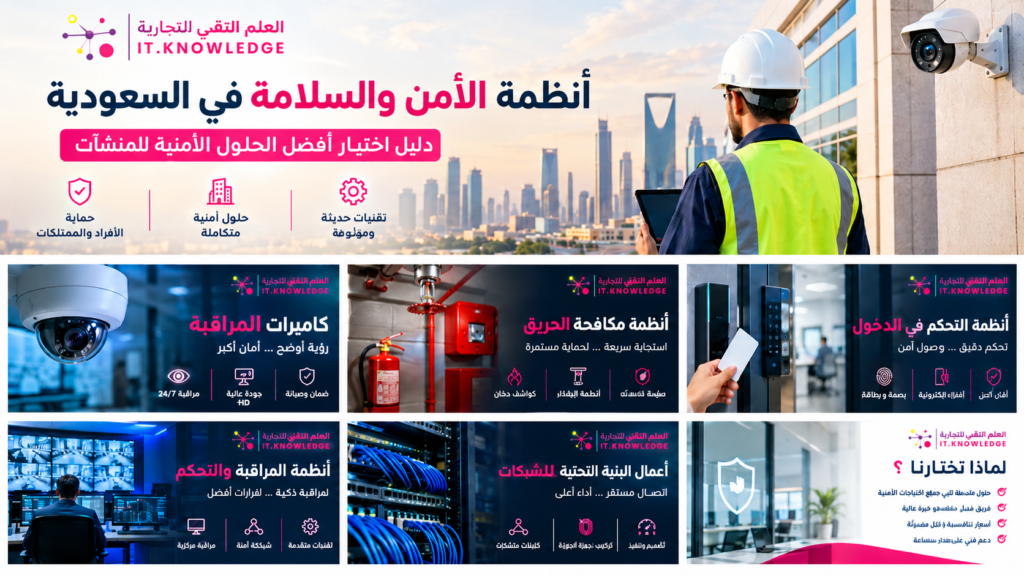
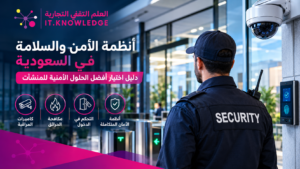
Security and safety systems in Saudi Arabia have become essential to protecting commercial, administrative, industrial, and residential facilities, particularly with urban expansion and the growing reliance on modern technology. Protection is no longer limited to the presence of security personnel; it now relies on an integrated solution combining surveillance cameras, access control, metal detection, fire suppression systems, centralized monitoring, and other modern technologies.
This guide aims to help you understand the main security solutions available and choose the right system for your facility. It also explains the key factors to consider before purchasing or installing any security system.
Why Do Facilities Need Security and Safety Systems?
Security and safety should be viewed as more than an additional expense. They are a long-term investment that helps facilities reduce risks and protect employees, customers, and property. Modern security systems also help detect problems quickly and address them before they develop into major losses.
📹 Continuous Monitoring
Surveillance cameras help monitor entrances, exits, and sensitive areas, document events, and provide recordings when needed.
🔥 Reducing Fire Risks
Fire alarm and suppression systems help detect danger early and speed up emergency response.
🚪 Managing Entry and Exit
Access control systems make it possible to determine who is authorized to enter different areas within a facility.
🛡️ Improving Protection
Combining multiple security systems creates an integrated protection solution instead of relying on a single measure.
First: Security Surveillance Cameras
Surveillance cameras are among the most widely used security solutions in Saudi facilities because they provide an effective way to monitor important locations and record events around the clock. Cameras can be used in offices, warehouses, retail stores, factories, schools, administrative buildings, and various other facilities.
For a closer look at camera capabilities and monitoring options, read our guide to traditional vs. smart surveillance systems before choosing the right solution for your facility.
Which Types of Surveillance Cameras Are Suitable for Facilities?
Cameras vary according to their installation location and intended use. Indoor cameras are suitable for offices and corridors, while outdoor cameras are designed for external conditions. Other options include high-resolution cameras and cameras equipped with intelligent features.
Tip:
Do not choose a camera based on resolution alone. You should also consider the viewing angle, lighting, area size, storage, lens quality, and the system’s ability to integrate with other security systems.
Second: Access Control Systems
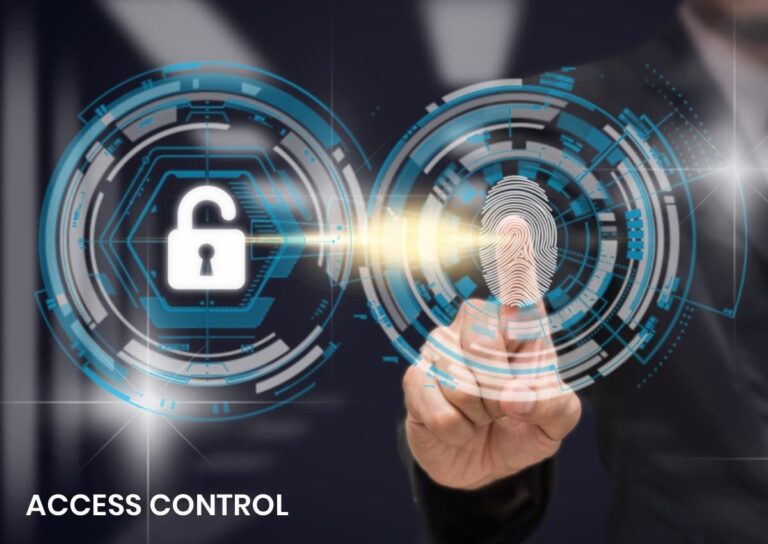
Access control systems help manage the movement of people within a facility by defining permissions for employees and visitors and specifying which areas each group may access.
Common Access Control Technologies
- Fingerprint readers.
- Smart access cards.
- Facial recognition devices.
- Electronic gates.
- Electronic locks.
- Visitor management systems.
Access control systems can be integrated with surveillance cameras to provide more comprehensive monitoring and verification of entry and exit activity.
Third: Metal Detectors
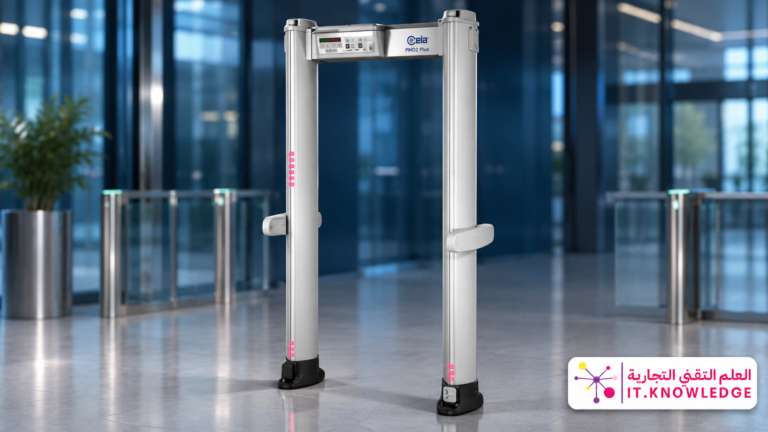
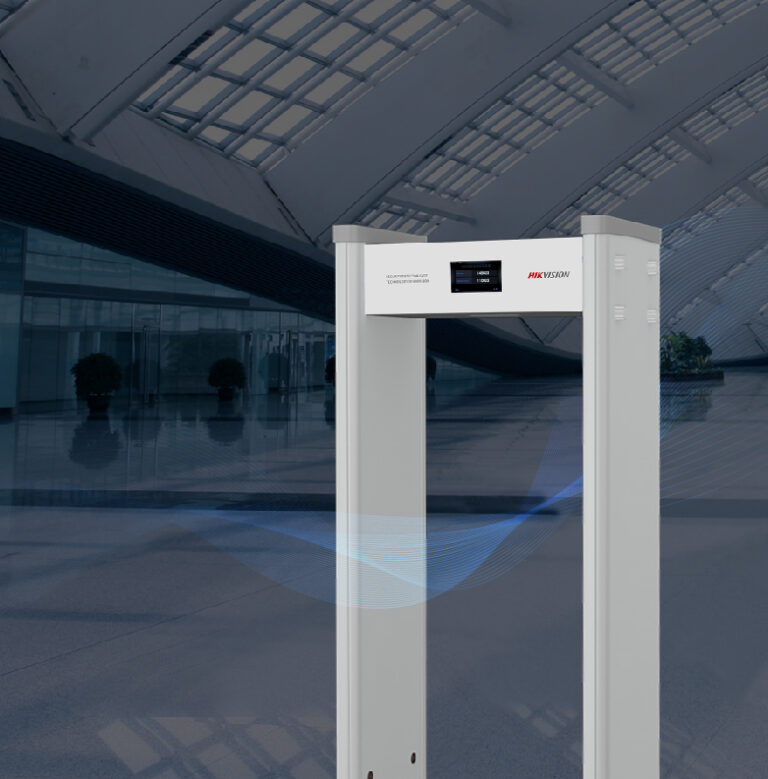
Metal detectors are used at many entrances and facilities that require an additional level of security screening. Solutions include handheld detectors and walk-through metal detectors that allow people to be screened as they pass through an entry point.
security
Where Can Metal Detectors Be Used?
- Main facility entrances.
- Security-sensitive facilities and buildings.
- Certain commercial and administrative facilities.
- Airports and facilities requiring screening procedures.
- Events and sites that need controlled entry.
The choice of metal detector depends on the site’s characteristics, entry traffic volume, required sensitivity, and the device’s technical features.
Fifth: Centralized Monitoring and Control Systems
When a facility is large or contains multiple security systems, centralized management becomes important. Monitoring and control systems allow numerous devices and data streams to be managed through a single control center.
The monitoring solution may include display screens, camera recordings, alerts, access control systems, and security event monitoring, helping security teams make faster and more organized decisions.
Sixth: Infrastructure and Networks for Security Systems
Many modern security systems cannot operate efficiently without suitable infrastructure. Surveillance cameras and intelligent systems need stable networks, adequate storage capacity, and communication equipment that supports reliable data transfer.
The network should therefore be assessed before system installation, especially in large facilities with numerous cameras or devices connected to a single control center.
Comparison of Key Security and Safety Systems
| System | Protection Level | Best Use | Approximate Cost |
|---|---|---|---|
| 📹 Surveillance Cameras | High | Offices, retail stores, and warehouses | Moderate |
| 🔥 Fire Protection Systems | Very high | Most types of facilities | Moderate to high |
| 🚪 Access Control | High | Offices and administrative facilities | Moderate |
| 🛡️ Metal Detectors | High | Entrances and sensitive facilities | Moderate |
| 🖥️ Centralized Monitoring | Very high | Large facilities | High |
How Do You Choose the Best Security and Safety Systems for Your Facility?
Choosing the right security system is not based on price alone. It should begin with understanding the facility, potential risks, and areas that require additional protection.
When planning system integration, review the official ONVIF website for information about standardized interfaces and interoperability between IP-based physical security products. Confirm compatibility for the specific devices and features required by your project.
Is a Single System or an Integrated Security Solution Better?
This depends on the facility. In some small sites, surveillance cameras may cover a large share of security needs, while larger facilities require multiple integrated systems for better protection.
| Option | Advantages | Disadvantages | Suitable For |
|---|---|---|---|
| Single System | Lower cost and easier management | Limited risk coverage | Small sites |
| Integrated Solution | Multiple layers of protection | Requires greater investment | Medium and large facilities |
Common Mistakes When Choosing Security and Safety Systems
Several mistakes can affect the efficiency of a security system and lead to additional costs in the future. The most common include:
- Choosing a system based on price alone.
- Buying devices that do not suit the site.
- Neglecting network and infrastructure quality.
- Failing to plan for future expansion.
- Neglecting regular maintenance.
- Installing systems without adequately assessing the site.
- Failing to train employees to use the systems.
The Importance of Integrating Security and Safety Systems
One of the key modern approaches to protection is system integration. For example, surveillance cameras can be linked to access control systems so that events are recorded and entry and exit activity can be monitored more effectively.
Alarm systems, monitoring centers, and notifications can also be connected within a single solution, helping security teams detect and respond to events more quickly.
How Do You Choose a Suitable Security and Safety Systems Company?
Choosing the installation company is just as important as choosing the equipment itself. A specialist company can assess the site, recommend suitable solutions, carry out installation and testing, and provide maintenance and technical support.
Key Points to Review
- The company’s experience with similar projects.
- The quality of the equipment and systems used.
- The ability to provide integrated solutions.
- The availability of technical support and after-sales service.
- The clarity of the technical and financial proposal.
- Compliance with requirements and conditions relevant to the project.
Frequently Asked Questions About Security and Safety Systems in Saudi Arabia
Conclusion
Security and safety systems in Saudi Arabia have become important tools for helping facilities protect people and property while improving monitoring and risk response. The right system varies from one facility to another according to its size, activity, and required protection level.
The best results therefore begin with a detailed site assessment, followed by selecting suitable systems and connecting them through a carefully planned design, with attention to installation, maintenance, and ongoing technical support.
You can explore the best protection solutions for Saudi facilities here.